


In recent years, interactive conference flat panels have become essential catalysts for corporate digital transformation—helping enterprises curb operational overhead, elevate collaboration efficiency, and project a modern smart office image. However, many procurement teams lack clarity regarding product categories, purchasing generic touch all-in-one kiosks purely on low price points, only to discover post-deployment that these units fail to meet collaborative meeting demands. What are the fundamental differences between conference interactive flat panels and generic touch all-in-one machines?
1. Definitive Conceptual Differences
Touch All-in-One Displays (Touch Kiosks / Touchscreen Computers): Broadly integrate touchscreen sensors, industrial control boards, and computer hardware. Tailored to touchscreen scale and peripheral software, they serve diverse roles including public self-service directory lookup, commercial advertising, multimedia exhibits, and retail showroom showcases.
Conference Interactive Flat Panels (Smart Meeting Boards / Enterprise Smart Displays): Consolidate high-definition commercial panels, digital whiteboards, audio systems, video conferencing endpoints, and wireless screen mirroring into a unified terminal. Designed specifically for corporate collaboration, they satisfy comprehensive meeting demands: document presentation, multimedia playback, 4K UHD display, digital whiteboarding, wireless casting, document annotation, cloud archiving, and remote video conferencing. Ranging from 55 to 98 inches, they serve corporate boardrooms, educational classrooms, financial institutions, government chambers, and healthcare centers.
2. Category Scope and Market Hierarchy
Touch all-in-one displays represent a broad technological umbrella encompassing diverse commercial categories: interactive digital podiums, educational all-in-one teaching displays, nano-blackboard systems, self-service information kiosks, and rugged industrial touch terminals. A conference interactive flat panel is an advanced, specialized subset within this umbrella, engineered specifically for enterprise collaboration and boardroom environments.
3. Dimensional Scale and Form Factors
Regarding dimensional specifications, conference interactive flat panels focus on standardized, human-centric boardroom sizes: 55, 65, 75, 86, and 98 inches. Generic touch all-in-one displays span a vast spectrum ranging from compact 7-inch self-service screens to expansive 110-inch industrial monitors, featuring varied vertical, angled, and tabletop kiosk enclosures.
4. Functional Architecture and Operating Ecosystem
Generic touch all-in-one displays are general-purpose interactive terminals that combine PC, display, and audio hardware. Functionally, they integrate diverse peripheral hardware—such as fingerprint biometric scanners, IC card readers, barcode scanners, and thermal receipt printers—to fulfill specific transactional or self-service tasks (e.g., employee attendance clocking, ticket issuance, point-of-sale checkout).
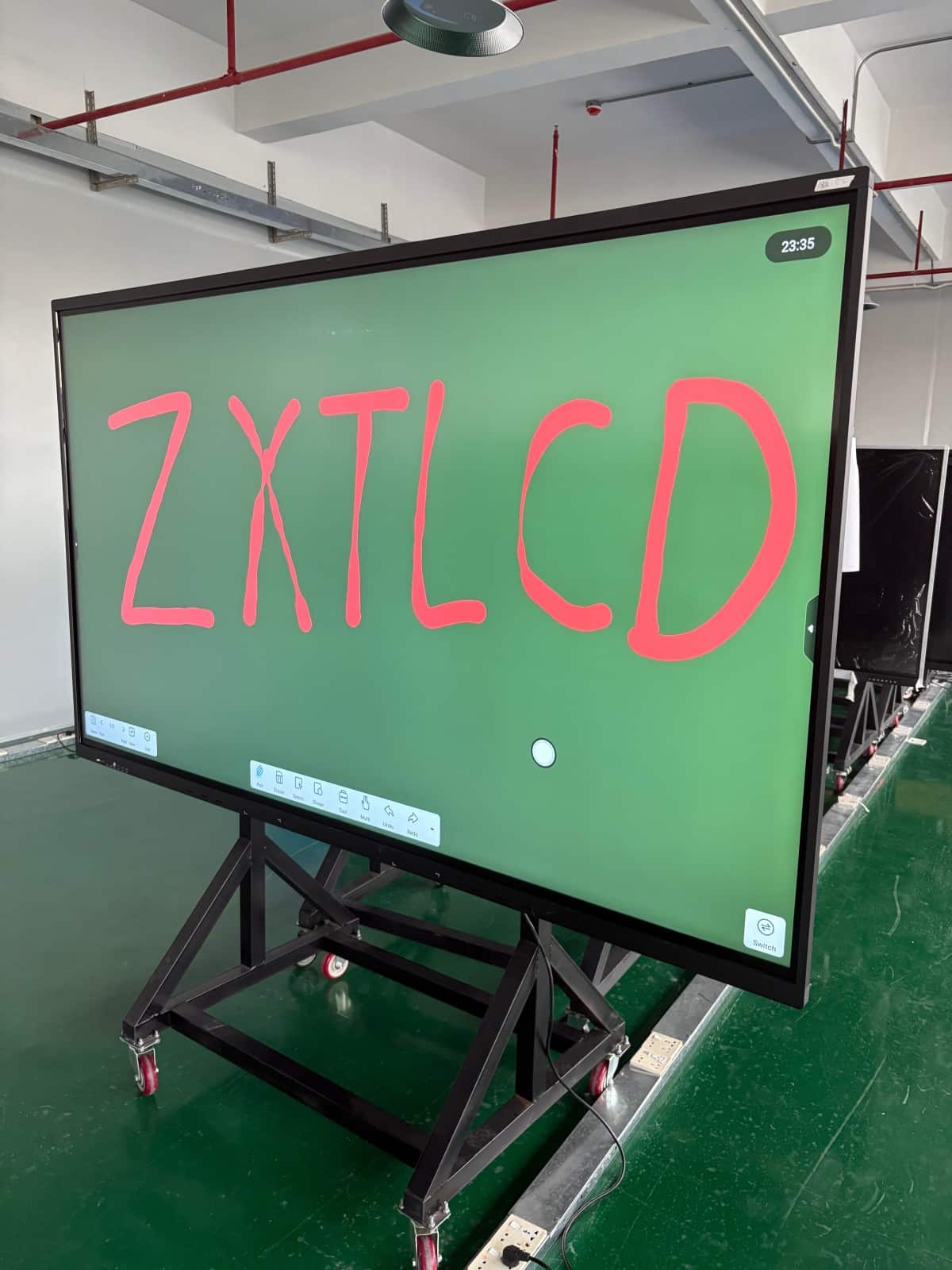
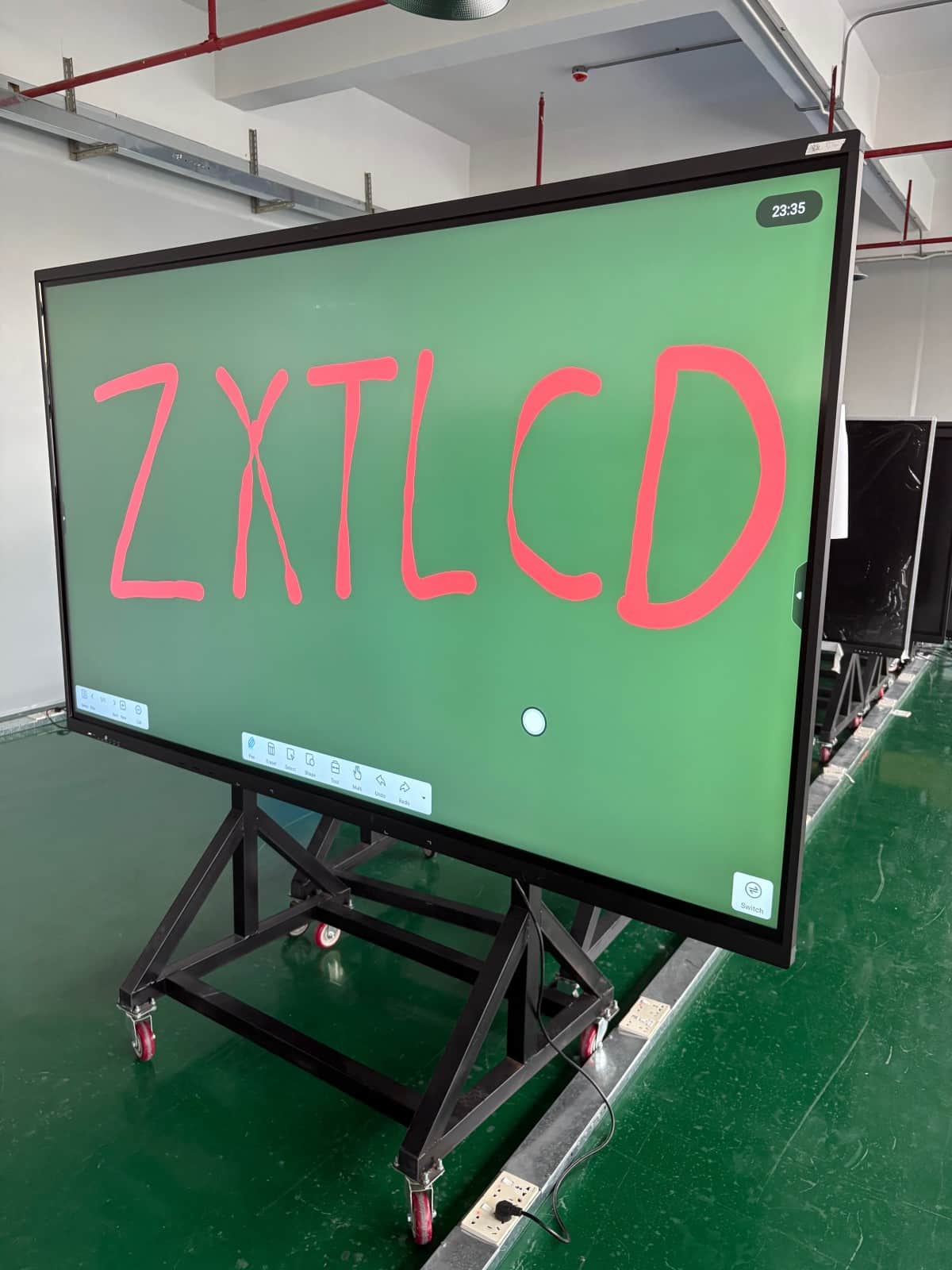
Conference interactive flat panels are engineered specifically for intelligent corporate workflows. Product design focuses on human-centric meeting experiences, consolidating projectors, projection screens, dry-erase whiteboards, speakers, video conferencing codecs, and computers into an elegant ‘All-in-One’ architecture. Mainstream conference panels deliver 4K UHD optics, multi-point touch, zero-latency vector whiteboarding, multi-device wireless casting, cloud video conferencing, instant QR-code minute sharing, and enterprise cloud integrations—eliminating traditional projector shortcomings to deliver a modernized collaboration experience.
5. Industrial Aesthetics and Mechanical Styling
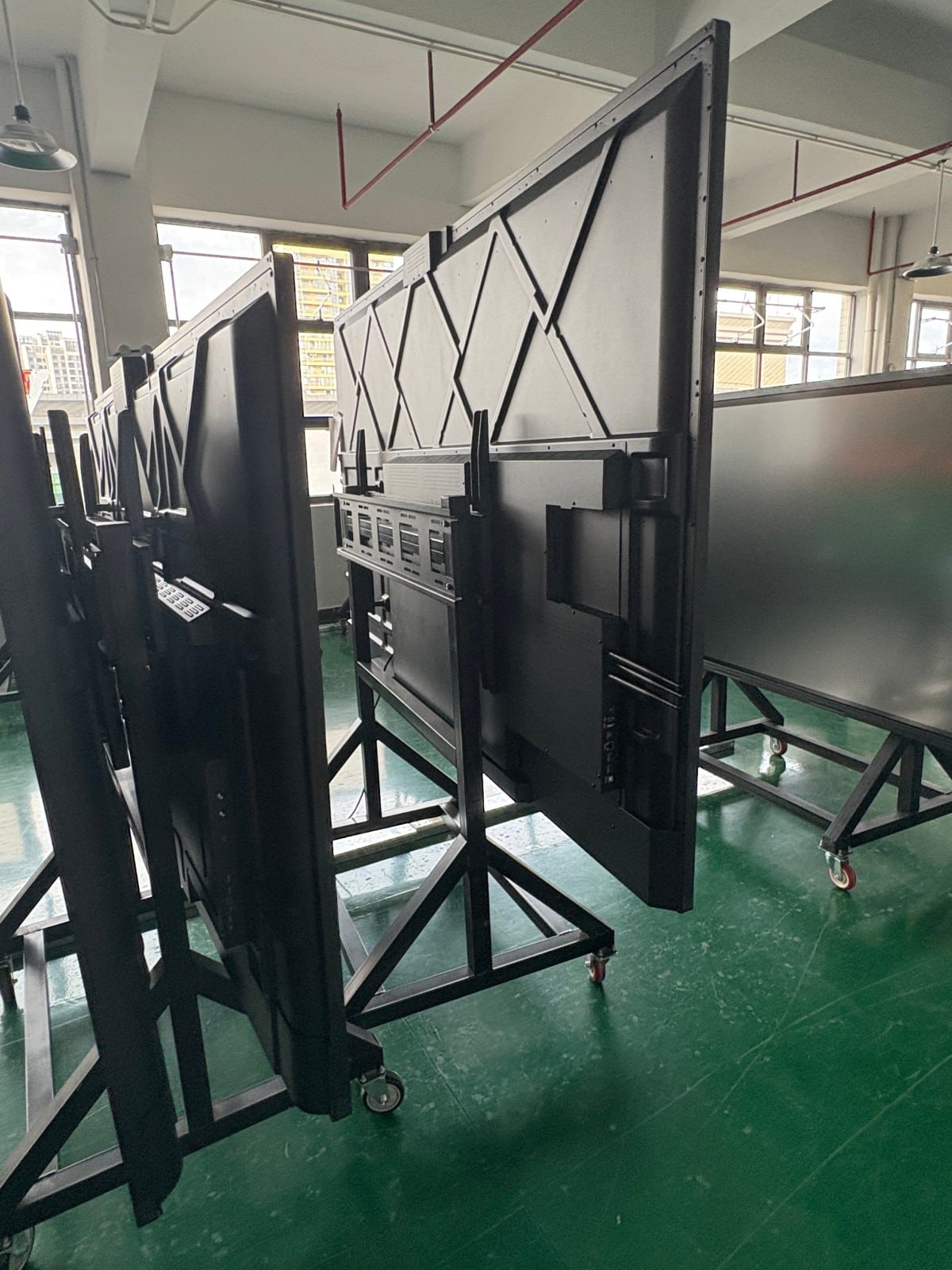
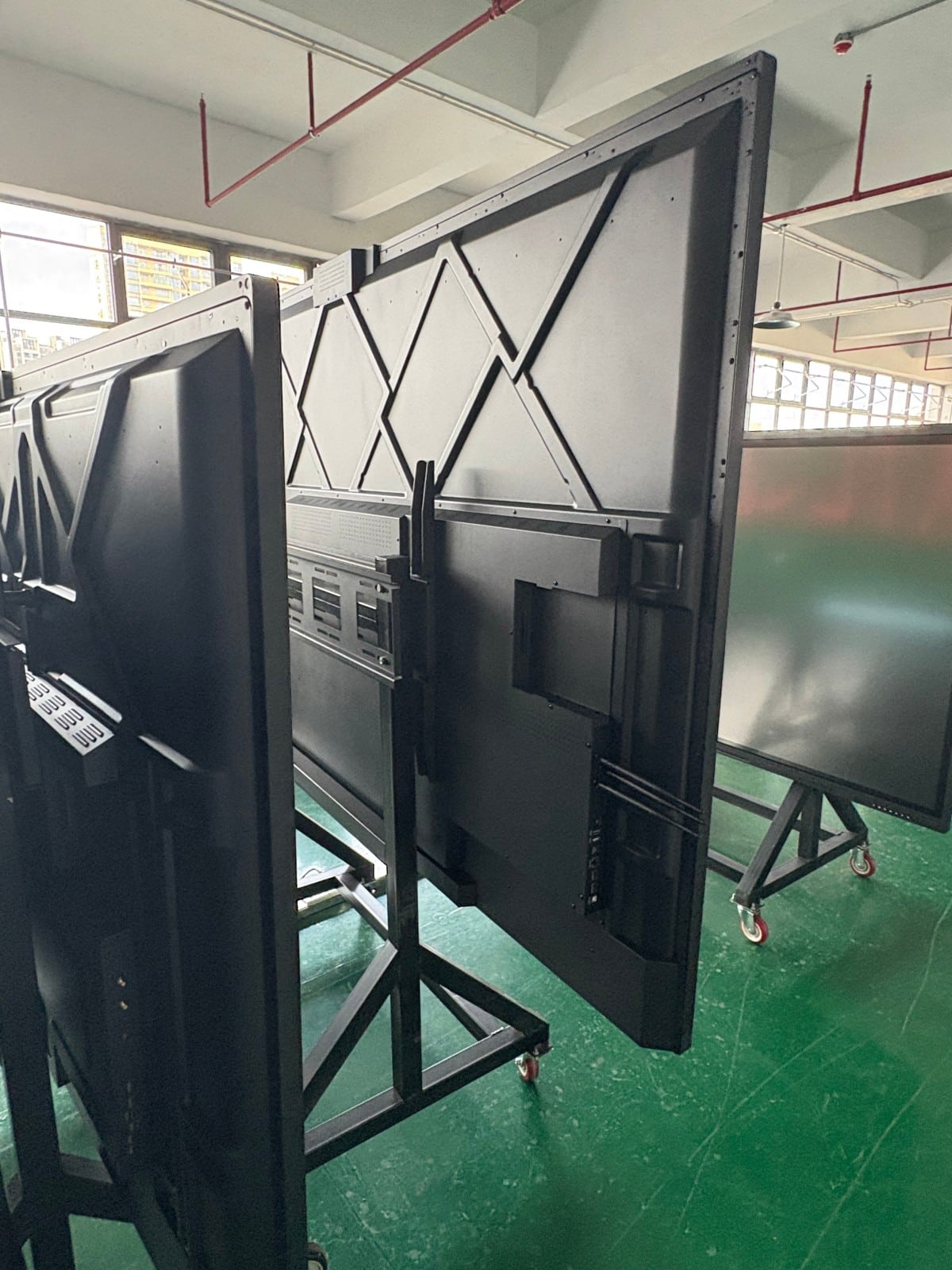
Generic touch all-in-one machines frequently adopt podium, kiosk, or terminal housing styles. In educational teaching displays, for example, front bezels feature visible USB, HDMI, and VGA ports alongside prominent mechanical function buttons, reflecting a multi-interface hardware aesthetic with high non-standard customization.
Conference flat panels adopt modern, minimalist commercial aesthetics modeled on ultra-slim commercial displays. Consolidating cameras, beamforming microphone arrays, stereo speakers, and touch sensors beneath clean, ultra-narrow bezels, their industrial design is refined and executive-grade. Conference panels mount cleanly on structural walls via low-profile brackets or on mobile rolling floor carts.
6. Operational Application Scenarios
Because generic touch all-in-one displays integrate industrial compute architectures, they satisfy specialized hardware integrations like biometric scanning, ticketing, and printing. They predominate across vocational training podiums, restaurant self-ordering kiosks, cinema ticket dispensers, retail self-checkouts, and industrial factory floor interfaces.
Conference interactive flat panels satisfy enterprise demands for intelligent, paperless office collaboration. Enabling fluid handwriting, multi-user simultaneous touch, multi-screen comparison casting, remote video collaboration, and instantaneous document distribution, they eliminate collaborative friction and overcome geographical distance barriers. Conference panels are widely deployed across corporate boardrooms, executive briefing centers, university lecture halls, banking conference rooms, government agencies, and telemedicine consultation suites, elevating organizational prestige and collaboration efficiency.
Explore Commercial Interactive Smart Boards & Conference Displays
If you are upgrading your conference room, training center, or collaborative workspace, explore our high-performance interactive flat panel models:
- 55 Inch Interactive Whiteboard for Compact Classrooms and Meeting Rooms
- 75 Inch Smart Board for Meeting Presentations and Decisions
Need a Customized Meeting Room Solution or Project Quote?
ZXTLCD delivers end-to-end interactive display engineering—from 55″ to 110″ 4K anti-glare touchscreens, integrated 4K ePTZ cameras, 8-array microphones, to dual Android/Windows OPS compute configurations.